
A 3.2% conviction rate, years of pre-trial imprisonment, and a legal architecture designed to deny bail—India's anti-terror law has become the BJP's favoured instrument for silencing dissent.
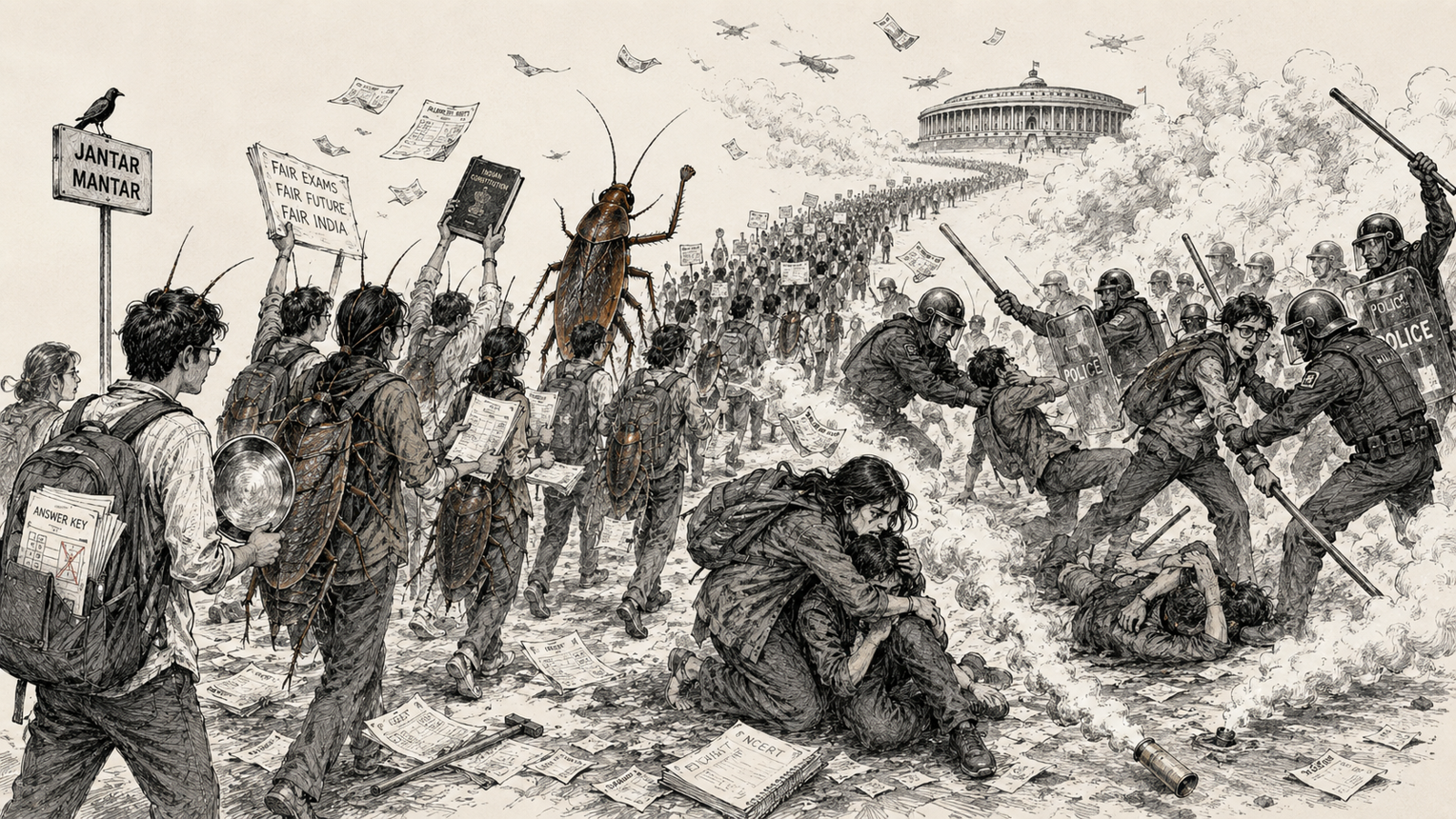
In December 2019 and January 2020, I was at the protests. I live in South Delhi, a short auto ride from Jamia Millia Islamia, where police entered the campus and beat students in the library. I walked to Shaheen Bagh, where women—mostly Muslim, mostly working-class—sat on a highway for 101 days in Delhi's bitter winter to protest the Citizenship Amendment Act. I stood in crowds, chanted slogans, and held placards. I was angry; we all were.
I was never arrested. I was never questioned. No FIR was filed against me. I went home to my warm flat, wrote angry tweets, and returned to my academic work.
Umar Khalid gave speeches at the same protests. He has been in jail for over five years now, awaiting trial under UAPA. Sharjeel Imam used the phrase "chakka jam"—road blockade—in a speech. He has been in jail since January 2020. Safoora Zargar, pregnant at the time of her arrest, spent months in custody before the courts finally granted bail.
The difference between us is not what we did. The difference is what we are. I am a Savarna woman—upper caste, Hindu, English-speaking, with institutional affiliations and social capital that make me expensive to target. They are Muslim. In the arithmetic of UAPA, that is the only variable that matters.
This essay is about arithmetic. It is about a law that has transformed India's criminal justice system into a mechanism for indefinite detention—where the process is the punishment, where bail is the exception, where your religion and caste determine whether dissent lands you in prison or merely on Twitter.
The Unlawful Activities (Prevention) Act has made the Constitution's promise of due process void—but not for everyone equally.
The Numbers Tell the Story
Here is the fact that should define every conversation about UAPA: between 2018 and 2022, the conviction rate under this law was 3.2%.
Let that sink in. For every 100 people charged under India's primary anti-terror legislation, three are eventually convicted. The remaining 97 are either acquitted or have their cases pending indefinitely—many after spending years in prison awaiting trial.
The National Crime Records Bureau data reveal a pattern that the ordinary functioning of the criminal justice system cannot explain. In 2022, courts across India disposed of 972 UAPA cases. Of these, 41 ended in conviction. The remainder—acquittals, discharges, and cases in which the prosecution failed to establish that any crime had occurred—accounted for 96.8% of outcomes.
This is not a conviction rate. This is an admission that the law is being used for something other than convicting terrorists.
The Architecture of Indefinite Detention
What distinguishes UAPA from ordinary criminal law is not only its provisions but also its purpose. Under normal circumstances, an accused person has a constitutional right to bail. The state must present sufficient evidence to justify continued detention. The accused is presumed innocent until proven guilty.
UAPA inverts this architecture.
Section 43D(5) of the Act provides that bail shall not be granted if the court is "satisfied that there are reasonable grounds for believing that the accusation against such person is prima facie true." Read that carefully: not "proven true," not "established beyond a reasonable doubt"—prima facie true. The accused must prove a negative to secure their freedom.
The Supreme Court, in NIA v. Zahoor Ahmad Shah Watali (2019), interpreted this provision to mean that courts at the bail stage should not conduct a "meticulous examination" of evidence. They should merely assess whether the prosecution's case appears credible on its face. If the chargesheet looks serious, bail should be denied.
The practical effect is devastating. Once arrested under UAPA, an accused can remain in prison for years while the trial creeps forward at the pace Indian courts typically manage—which is to say, glacially. The process itself becomes the punishment.
The Delhi Riots Cases: A Masterclass in Indefinite Detention
Consider Umar Khalid. The former JNU student leader was arrested in September 2020 for his alleged role in the February 2020 Delhi riots—the charge: conspiracy to incite violence.
As of January 2026, Khalid has been in custody for over five years. He has not been convicted. His trial has barely begun. Every bail application has been rejected because the allegations against him are severe enough to warrant continued detention.
What are those allegations? Primarily, Khalid gave speeches critical of the Citizenship Amendment Act (CAA). The prosecution's theory is that these speeches were part of a larger conspiracy to provoke communal violence in Delhi. The evidence consists primarily of WhatsApp messages, call records, and the testimonies of witnesses whose own credibility is contested.
Sharjeel Imam, another JNU student, faces similar charges for similar speeches. He has been in custody since January 2020. His crime: using the word "chakka jam" (road blockade) in the context of anti-CAA protests, which the prosecution interpreted as sedition.
Both men remain imprisoned not because courts have found them guilty, but because UAPA's bail provisions make release nearly impossible. The Supreme Court itself, in Watali, instructed lower courts not to examine the prosecution's evidence too closely. The natural consequence is that anyone charged under the UAPA remains in prison until the trial concludes—which, given India's judicial backlog, can take a decade or more.
The Bhima Koregaon Sixteen: When Evidence Is Fabricated
If the Delhi riots cases illustrate UAPA's capacity for indefinite detention, the Bhima Koregaon case demonstrates something worse: that the law creates a system where fabricated evidence cannot be challenged.
The case began on 1 January 2018, when violence broke out at Bhima Koregaon in Maharashtra during an annual commemoration of a 19th-century battle. What followed was one of the most controversial prosecutions in recent Indian history.
Sixteen activists, lawyers, academics, and writers were arrested over the following years. The charges: links to Maoist organisations, conspiracy to overthrow the government, and even a plot to assassinate Prime Minister Modi. The evidence: documents allegedly found on their computers, including letters that supposedly detailed their revolutionary plans.
There was one problem. The documents were planted.
Arsenal Consulting, a digital forensics firm based in Massachusetts, conducted an independent analysis of the accused persons' computers. Their findings were explosive:
The computers had been infected with NetWire, a commercially available malware used for remote access
The infection occurred 22 months before the arrests
An attacker had used this access to deposit incriminating documents onto the hard drives
The documents were never opened by the accused—they existed only in hidden folders placed by the malware
The implications are staggering. The primary evidence used to justify years of imprisonment was fabricated by an unknown third party who had hacked the accused persons' computers. Yet the case continues. The accused remains in prison.
Father Stan Swamy, an 84-year-old Jesuit priest and tribal rights activist, was among those arrested. He suffered from Parkinson's disease. In custody, he was denied a straw and sipper to help him drink water—a request that should have been unremarkable but was contested by the NIA for weeks. He died in custody on July 5, 2021, still awaiting trial, his bail applications repeatedly denied.
Stan Swamy never saw the evidence against him tested in Court. The fabrication uncovered by Arsenal Consulting was never examined in a trial. The 84-year-old priest with Parkinson's disease died in prison based on documents that forensic experts say were planted on his computer by hackers.
The Gurwinder Singh Problem
In October 2021, the Supreme Court finally pushed back—sort of. In Union of India v. K.A. Najeeb, the Court held that constitutional courts retain the power to grant bail even in UAPA cases if "there is no likelihood of trial being completed within a reasonable time and the accused has already undergone incarceration for a significant period."
The principle seemed clear: even under UAPA, indefinite detention without trial violated fundamental rights.
Subsequently, Gurwinder Singh v. State of Punjab (2024) arose.
In this case, the Supreme Court clarified—or perhaps reversed—its earlier position. Constitutional courts, the bench held, should be "extremely loath" to invoke jurisdiction to grant bail in UAPA cases. The special provisions of Section 43D(5) reflected Parliament's considered judgment that terrorism cases required stricter bail standards. Courts should defer to this legislative wisdom.
The practical effect: the brief window created by Najeeb slammed shut. Lower courts once again began denying bail almost reflexively in UAPA cases, citing Gurwinder Singh as authority. The accused in the Delhi riots case, the Bhima Koregaon case, and dozens of others remain imprisoned, their constitutional rights subordinated to a statutory provision that presumes guilt.
International Condemnation Falls on Deaf Ears
The world has noticed.
The UN Human Rights Committee, reviewing India in 2024, expressed concern about "the overly broad definition of 'unlawful activity' and 'terrorist act'" in UAPA and "the possibility of detention without charges or trial for lengthy periods."
The European Parliament passed a resolution condemning the use of UAPA against activists, journalists, and human rights defenders.
Amnesty International, Human Rights Watch, and Reporters Without Borders have documented the misuse of the UAPA.
The Indian government's response has been consistent: these are internal matters, foreign interference is unwelcome, and critics do not understand the security challenges India faces.
The BJP's Tool of Choice
What explains UAPA's transformation from an anti-terror law to a tool for political detention?
The answer lies in the law's convenience. Unlike preventive detention under other statutes, which are subject to time limits and review mechanisms, UAPA permits the state to imprison citizens indefinitely through the fiction of criminal prosecution. The accused is not "detained"—they are merely "awaiting trial." The fact that the trial may never conclude, that the evidence may be fabricated, that the accused may die in custody, does not formally matter.
The statistics tell the story of selective enforcement. UAPA cases have risen sharply since 2014. The accused are disproportionately drawn from specific communities and political positions: Muslims, Dalits, Adivasis, left-wing activists, journalists who cover uncomfortable stories, lawyers who defend unpopular clients.
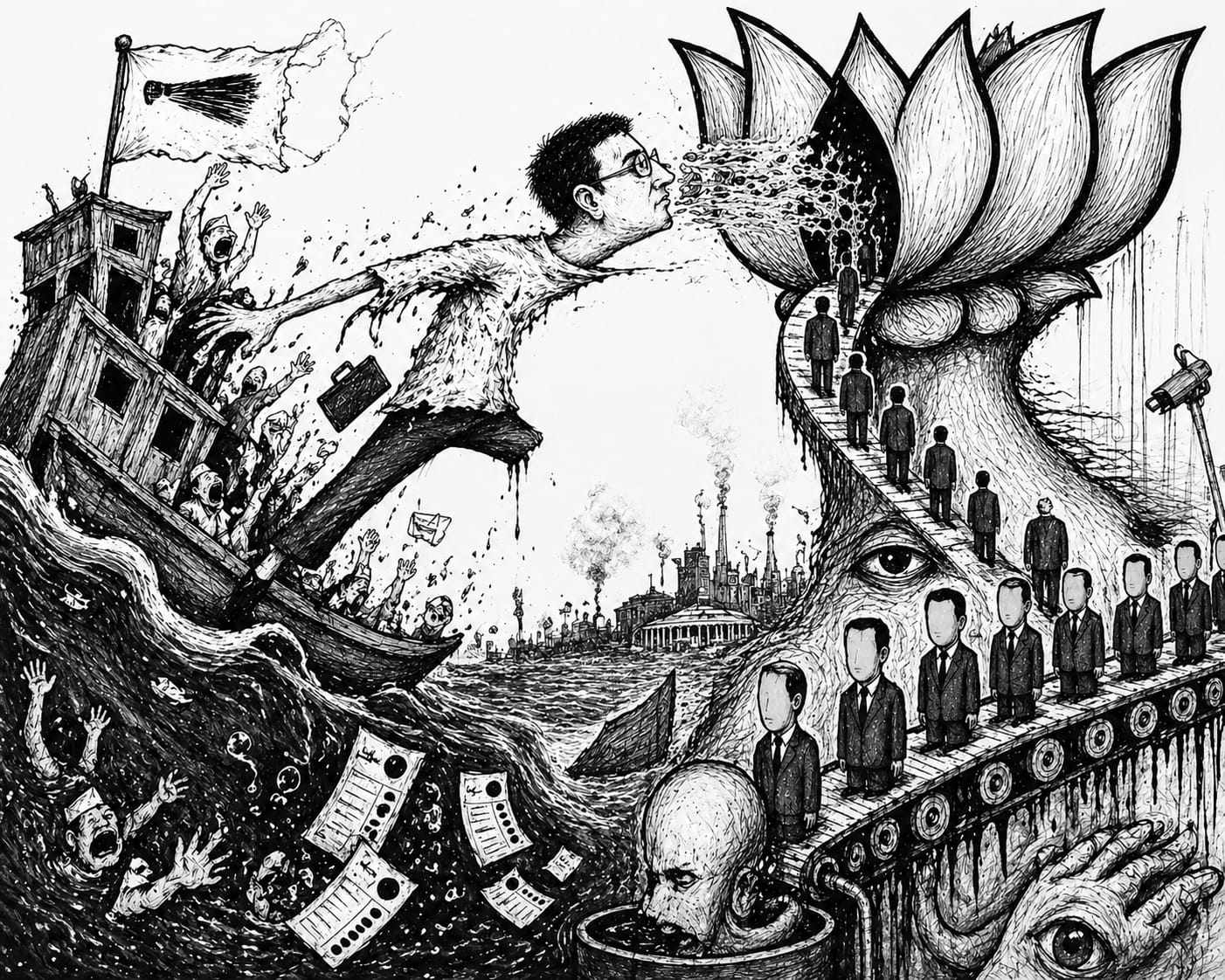
The pattern is not accidental. UAPA has become the BJP's preferred mechanism for silencing dissent while maintaining the appearance of legal process. Unlike emergency powers or explicit censorship, UAPA operates through courts. The accused receive trials—eventually. They can appeal—fruitlessly. The system maintains its formal legitimacy while functionally abandoning the presumption of innocence.
What Would It Take to Fix This?
The reforms required are not mysterious:
First, Section 43D(5) should be amended to restore the ordinary burden of proof for bail. The prosecution should be required to justify continued detention, not the accused to justify release.
Second, strict time limits should be imposed on trials in UAPA cases. If the state cannot complete its prosecution within, say, three years, the accused should be released on bail automatically.
Third, an independent forensic review should be mandatory for digital evidence. The Bhima Koregaon case demonstrates that current safeguards are insufficient to prevent fabrication.
Fourth, the definitions of UAPA should be narrowed. "Unlawful activity" is currently so broad that it can cover almost any speech or association the government dislikes.
None of this will happen under the current dispensation. UAPA functions exactly as intended: it allows the state to imprison its critics indefinitely while maintaining the pretence of due process. The 3.2% conviction rate is not a bug. It is a feature.
The Disappeared Citizens
There are no official statistics on how many Indians are currently imprisoned under UAPA awaiting trial. The NCRB data tells us about arrests and disposals but not about the thousands caught in between—accused but not convicted, imprisoned but not sentenced, their lives suspended indefinitely in a legal limbo that serves no purpose except punishment.
These are not terrorists. They are citizens who said the wrong thing, associated with the wrong people, or simply attracted the state's attention at the wrong time. Their imprisonment does not make India safer. It makes India less free, less democratic, and less worthy of the constitutional ideals it claims to uphold.
The law that was meant to protect India from terrorism has become a tool for terrorising Indians. The 3.2% conviction rate is its confession.
Further reading:
NIA v. Zahoor Ahmad Shah Watali (2019) - The Supreme Court judgment that made UAPA bail nearly impossible
Arsenal Consulting Reports on Bhima Koregaon - Digital forensics evidence of planted evidence
NCRB Crime in India Reports - Official statistics on UAPA arrests and convictions
UN Human Rights Committee Review of India (2024) - International concerns about UAPA
The Wire's coverage of the Umar Khalid and Bhima Koregaon cases
















Write a comment ...